The genetic code is the universal language of life, using three-letter DNA codons to specify 20 amino acids. This system is so fundamental that it has remained unchanged since the last common ancestor of all organisms. But what if we could simplify it? Researchers from Columbia and Harvard recently attempted to do just that—by removing one of the 20 amino acids, a groundbreaking step that could reshape our understanding of evolution and open new doors in synthetic biology. Here are eight key things you need to know about this ambitious experiment.
1. The Genetic Code Is Nearly Universal
With only minor variations, every living thing on Earth uses the same genetic code to translate DNA into proteins. This code relies on 64 codons to encode 20 amino acids and three stop signals. The near-universality suggests it originated in the last universal common ancestor (LUCA) billions of years ago. Scientists have long speculated how this code evolved, with many believing early life used a simpler, partial code with fewer amino acids. Testing that hypothesis requires experimental simplification—exactly what this study attempts.
2. Early Life Likely Had Fewer Building Blocks
Most hypotheses propose that primitive life forms operated with a reduced genetic code, gradually incorporating new amino acids over time. The 20 we use today may be a historical accident, not an optimal set. By attempting to eliminate isoleucine—one of the 20—researchers can simulate an evolutionary step backward. If successful, it supports the idea that the code can be trimmed without breaking essential functions, offering clues about the minimal requirements for life.
3. The Goal Is Not Just Curiosity—It's Practical
Beyond testing evolutionary theories, altering the genetic code has real-world applications. Most work in this field focuses on expanding the code to include non-standard amino acids, enabling novel proteins with useful properties—like better drugs or industrial enzymes. However, shrinking the code could be equally valuable. It might simplify cellular engineering, reduce metabolic burden, and create organisms dependent on synthetic supplements, a biocontainment strategy. This dual potential drives the research.
4. Isoleucine Was the First Target
Why isoleucine? It's an essential amino acid with a bulky hydrophobic side chain. Researchers chose it because its removal would force the cell to adapt, potentially revealing how the code can be minimized. Isoleucine is encoded by three codons (AUU, AUC, AUA), making it a manageable test case. The team engineered a strain of E. coli where all isoleucine codons in essential genes were replaced with codons for similar amino acids, like leucine or valine, to see if the cell could survive.
5. They Focused on the Ribosome
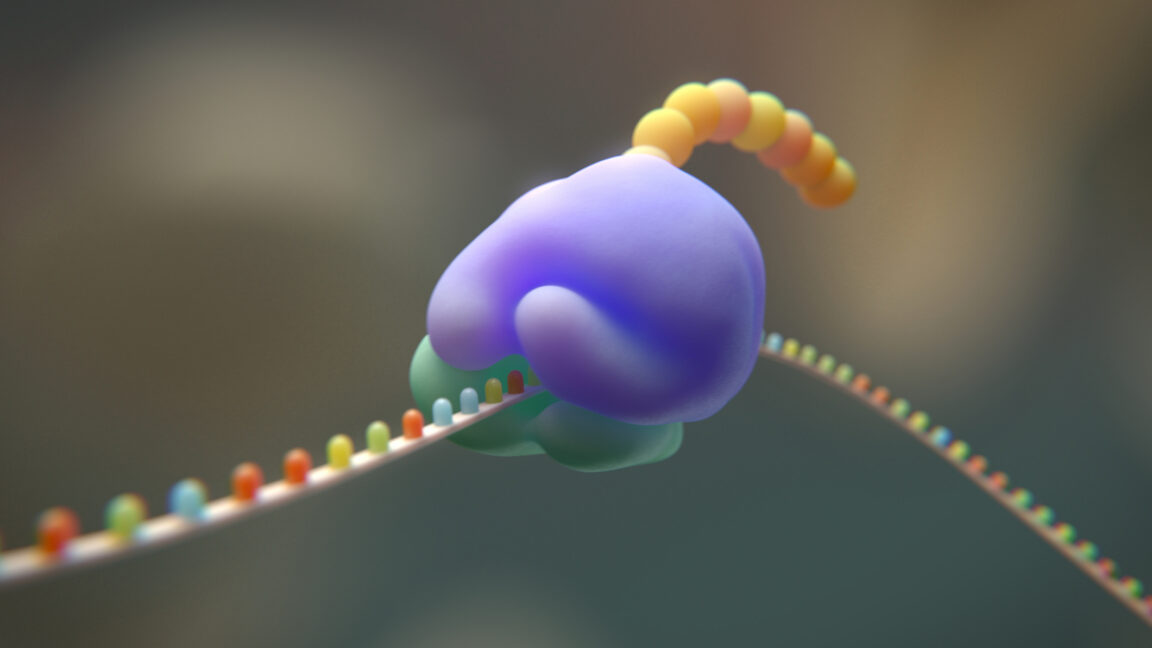
Instead of rewriting the entire genome, the team targeted a critical component: the ribosome. This molecular machine synthesizes proteins and itself contains isoleucine at key positions. By engineering a ribosome variant that functioned without isoleucine—using substitutions like leucine or valine—they demonstrated that a core cellular process can operate 19 amino acids. This was a proof-of-concept, showing the approach's feasibility before tackling the whole organism.
6. The Challenges Are Formidable
Removing an amino acid from the genetic code isn't easy. Isoleucine appears in thousands of proteins, each performing essential roles. Simply deleting it would be lethal. The team had to systematically replace every isoleucine codon in genes critical for survival. Even then, the substitutions must preserve protein structure and function. The ribosome experiment worked, but widespread applicability requires sophisticated genome editing and careful testing. It's a slow, meticulous process.
7. This Work Could Revolutionize Synthetic Biology
If researchers succeed in creating a 19-amino-acid organism, the implications are huge. It would prove that life can operate with a reduced genetic code, offering a foundation for designing minimal cells. Such cells could serve as chassis for biotechnology, with simplified metabolism and reduced genetic noise. Moreover, a recoded organism might resist viruses that rely on the standard code, providing a natural biocontainment mechanism. The potential stretches from basic research to practical applications.
8. The Future: From 19 to … 20 Again?
The ultimate goal isn't just to shrink the code but to understand its flexibility. Once a 19-amino-acid organism is stable, researchers could attempt to add a new, synthetic amino acid back—creating a 21st building block. This would mimic how the code evolved over eons. The Columbia-Harvard study is just the first step. It opens the door to asking: what if we could rewrite the language of life entirely? The answer could redefine biology as we know it.
In summary, the attempt to cut the genetic code from 20 to 19 amino acids is far more than a curiosity. It challenges our assumptions about life's fundamental blueprint, offers practical tools for synthetic biology, and may unlock the secrets of evolution itself. While still in early stages, this research promises to reshape our understanding of what is possible in the living world.