The Vanishing Act: A Lake's Sudden Demise
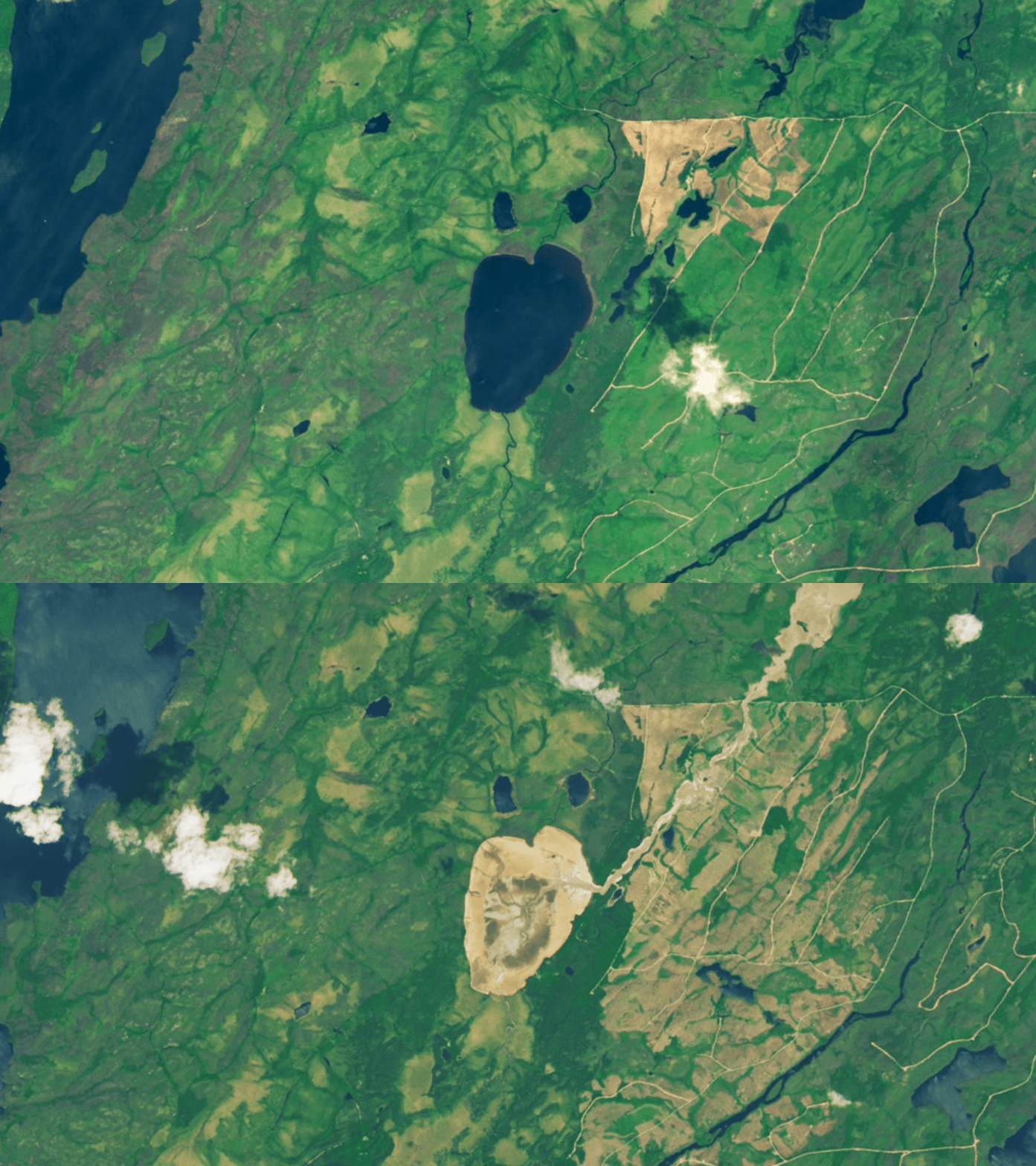
In a dramatic event captured by orbiting satellites, Canada's Lake Rouge—a body of water famously resembling a shocked emoji—has completely disappeared. Newly released before-and-after images from space show the startling transformation: where once a perfectly contoured blue lake sat nestled in the landscape, now only a muddy depression remains. The lake's vanishing occurred after a sudden, landslide-like collapse of one of its banks, draining the entire basin in what experts describe as a geologically rapid and rare event.
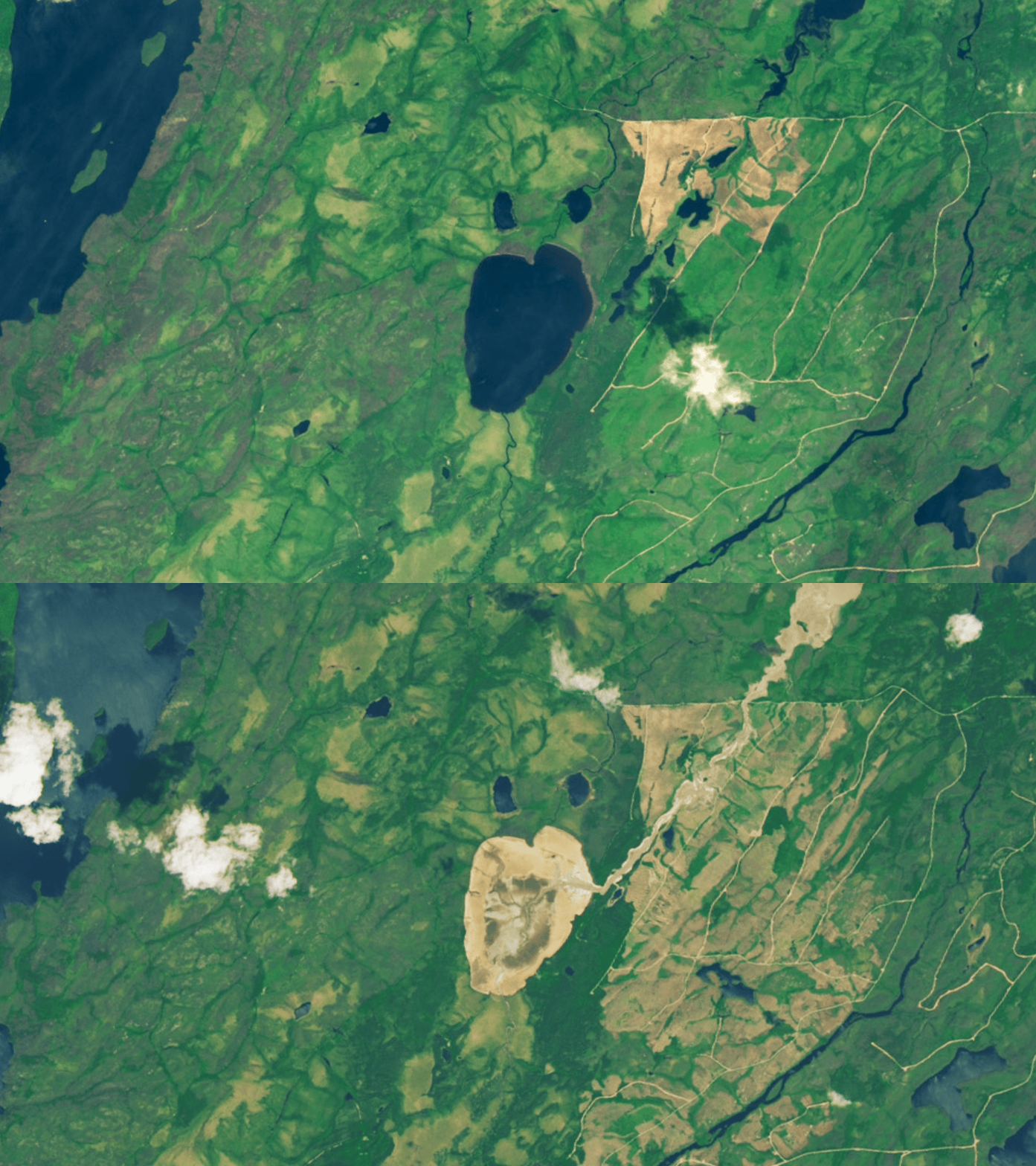
The satellite photos, taken just days apart, reveal the stark contrast. In the earlier image, Lake Rouge's distinctive shape—a near-perfect circle with a small indentation on one side, evoking a surprised face—is clearly visible. The later image shows the same area transformed into a dry, debris-filled scar, with no standing water left. This abrupt change has sparked interest among geologists and hydrologists, who are now analyzing the factors that led to the lake's demise.
What Went Wrong? The Science Behind the Collapse
According to researchers, the collapse was not caused by a single dramatic event but rather by a combination of environmental and geological factors that compromised the lake's banks over time. Key contributors include:
- Permafrost thaw: Rising temperatures in the region have weakened the frozen ground that once held the lake's banks stable.
- Erosion: Continuous wave action and runoff gradually undercut the soil, creating instability in the bank structure.
- Saturated soils: Heavy rainfall before the collapse added weight and pressure to already fragile bank materials.
- Weak underlying geology: The lake sat on a layer of unconsolidated sediments and ice-rich permafrost, prone to sudden failure when destabilized.
These factors combined to trigger a rapid failure: the bank gave way in a landslide-like slumping, releasing the lake's water in a torrent. Within hours, Lake Rouge was reduced to a dry basin, with the water likely draining into underground channels and the surrounding watershed.
A Natural Emoji: Why This Lake Was Special
Lake Rouge, located in a remote part of Canada's Yukon Territory, had long fascinated locals and satellite imagery enthusiasts alike. Its uncanny resemblance to an emoji—specifically the 😮 face—made it a viral sensation online. The lake was formed naturally in a depression left by glacial activity thousands of years ago, and its shape was maintained by the interaction of water, permafrost, and vegetation. Ironically, the same permafrost that helped preserve its shape ultimately contributed to its downfall.
The lake was not particularly deep or large, but its distinct appearance made it a landmark. No known human settlements were directly affected by the collapse, though the sudden release of water may have impacted local ecosystems downstream.
Broader Implications: Climate Change and Landscapes
The disappearance of Lake Rouge is more than a curious event; it serves as a stark indicator of the effects of climate change on northern landscapes. Permafrost thaw is accelerating across Canada's Arctic and sub-Arctic regions, leading to widespread ground instability. Similar collapse events have been documented in other lakes and landforms, though rarely as dramatically as this one.
Researchers note that the rate of change is troubling. Lakes that once seemed permanent can vanish in days, altering water availability, habitat, and even local climate patterns. The loss of Lake Rouge also highlights the fragility of these ecosystems—a single bank collapse can erase a feature that took centuries to form. As the planet warms, scientists expect more such events, with implications for infrastructure, wildlife, and Indigenous communities that rely on stable landscapes.
For now, Lake Rouge serves as a powerful visual reminder: even features that seem solid and enduring can disappear overnight when natural balances are disrupted. The satellite images not only document the lake's end but also offer a glimpse into a rapidly changing world where the ground beneath our feet is less stable than we imagine. As one expert put it, We are watching the face of the Earth change in real time.