Breaking: Simulation Achieves Production-Grade Accuracy, Ending Reliance on Physical Prototypes
Manufacturing's century-old design-build-test cycle is being dismantled. High-fidelity simulation now produces synthetic training data accurate enough for production-grade AI, enabling perception systems and agentic workflows to excel in live factory environments. This shift is driven by OpenUSD, a universal standard that ensures 3D assets travel reliably across design, simulation, and AI training pipelines.
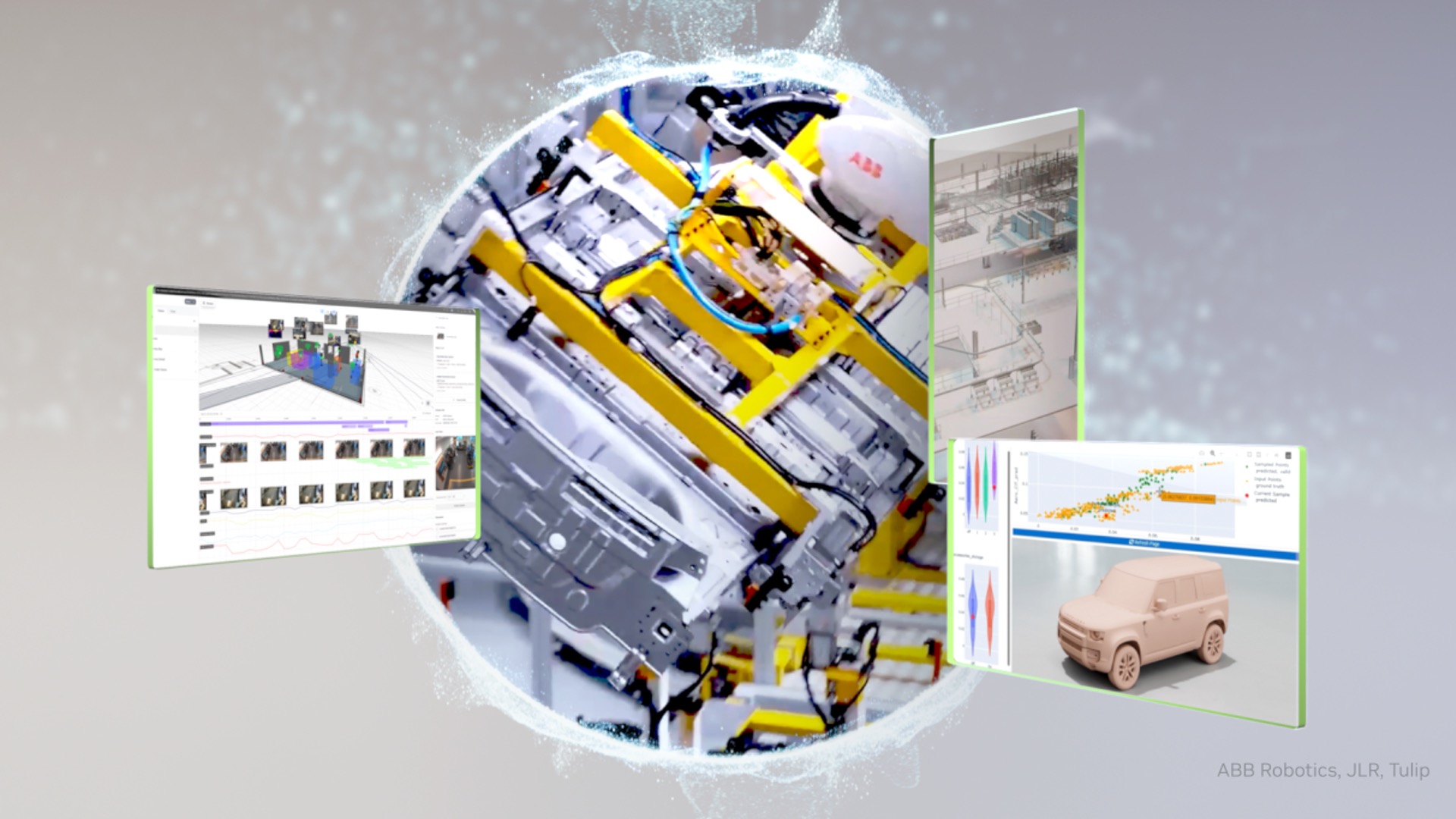
"We've achieved 99% accuracy on the simulated version," said Craig McDonnell, managing director of business line industries at ABB Robotics, referring to the company's RobotStudio HyperReality platform. ABB's integration of NVIDIA Omniverse libraries has reduced product introduction cycles by up to 50% and commissioning time by 80%.
SimReady: The New Content Standard for Physical AI
Assets lose physics properties, geometry, and metadata every time they move between CAD and simulation tools—forcing teams to rebuild. SimReady, built on OpenUSD, defines what physically accurate 3D assets must contain to work reliably across rendering, simulation, and AI training pipelines. NVIDIA Omniverse libraries provide the physics-accurate, photorealistic simulation layer where AI models are trained and validated before deployment.
ABB Robotics: Closing the Sim-to-Real Gap
ABB Robotics integrated NVIDIA Omniverse libraries directly into RobotStudio HyperReality, used by over 60,000 engineers globally. The platform represents robot stations as USD files running the same firmware as physical counterparts. This allows training robots, testing part tolerances, and validating AI models before a production line exists. Synthetic training variations—lighting conditions, geometry differences—can be generated at scale.
"We've vertically integrated the complete technology stack and optimized it to a point where we're now achieving 99% accuracy on the simulated version," McDonnell added. The results: up to 50% reduction in product introduction cycles, 80% reduction in commissioning time, and 30-40% reduction in total equipment lifecycle cost.
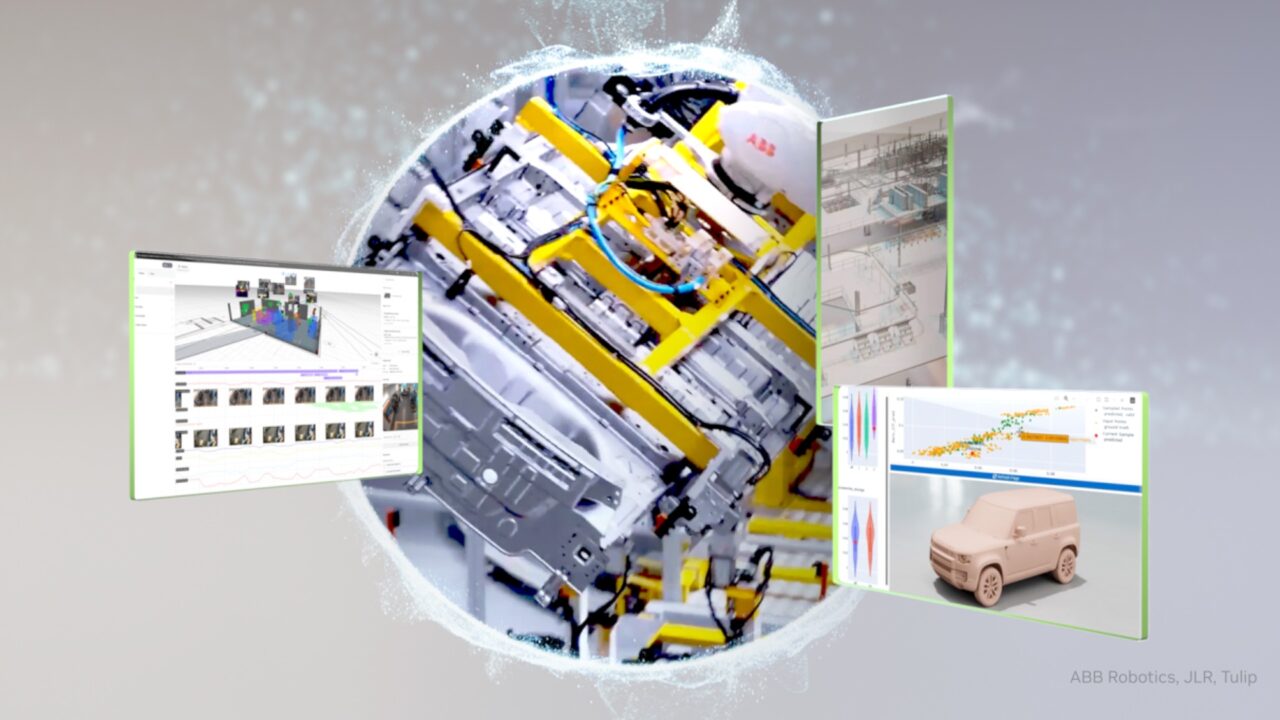
JLR: From Hours to Minutes in Aerodynamic Simulation
JLR applied simulation-first to vehicle aerodynamics. Engineers trained neural surrogate models on over 20,000 wind-tunnel-correlated computational fluid dynamics simulations. 95% of aero-thermal workloads now run on NVIDIA GPUs, compressing four hours of simulation into one minute.
Background: The Shift from Physical to Digital Testing
Manufacturing's traditional design-build-test cycle relied on real-world testing as the only reliable environment. That assumption is now outdated. OpenUSD has emerged as the connective standard, enabling seamless asset exchange. Companies like ABB and JLR are proving the concept works at scale. The technology stack—NVIDIA Omniverse, SimReady, physical AI—is being adopted by major manufacturers worldwide.
What This Means
This simulation-first era slashes costs, speeds time-to-market, and enables physical AI systems to perform reliably in live factories. For manufacturers, the barrier to entry is lowering: assets no longer need to be rebuilt for each platform. The 99% accuracy achieved by ABB suggests that simulation can replace many physical prototypes, reducing waste and accelerating innovation. As more companies adopt OpenUSD-based workflows, the industry will see a fundamental shift in how factories are designed, commissioned, and operated.